Mammographer Program

Mammographer Program
ON THIS PAGE
What is mammography?
Mammography is the process of using low-energy x-rays to create images to examine the human breast for diagnosis and screening. These images are then analyzed for abnormal findings. The goal of mammography is the early detection of breast cancer, typically through detection of characteristic masses or microcalcifications. Since 1990, mammography has helped reduce the number of breast-cancer deaths by almost one-third.
What are the responsibilities of a mammographer?
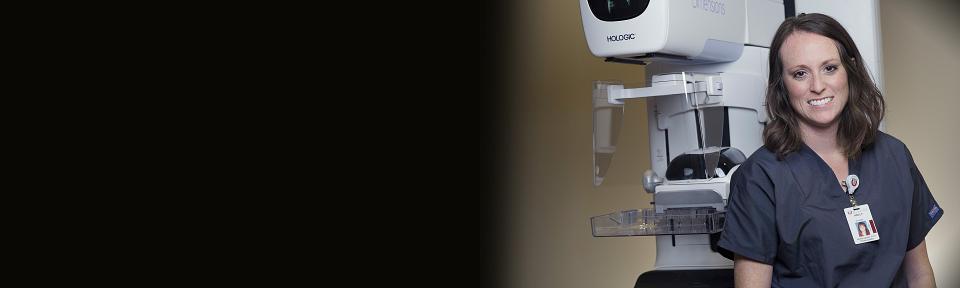
Many mammography patients come in for routine screenings; others might have lumps or other signs of breast cancer. As a mammographer, you’ll operate specialized equipment, obtaining images that help physicians detect breast cancer and other breast diseases in their earliest stages. A mammographer explains the procedure to the patient and properly positions the breast to obtain the best diagnostic images for the radiologist to interpret.
Mammograms are personal—and sometimes frightening—procedures for patients. You can be a comforting presence as people undergo screenings and exams.
How do I become a mammographer?
Prior to application for admittance into our clinical education program, students must complete a didactic training course. One option students typically choose is provided by the Medical Technology Management Institute (MTMI): their training course.
If admitted for clinical education there are clinical competency requirements set forth from the American Registry for Radiologic Technologists specific for those looking to complete the board examination. More information can be found here:
Overview
Our Mammographer Program offers a 3-month clinical education program for certified Radiologic Technologists. Students will learn how to produce diagnostic images in both abdominal and obstetrical ultrasound. The program is offered each quarter, annually.
University of Utah Health has more than 7 locations throughout the valley; allowing students to experience clinical care in both an inpatient hospital setting, as well as the outpatient environment. Students will have the opportunity to work one on one with a mammographer to learn the skills that will help them become an entry-level technologist by graduation.
PROGRAM INFORMATION
Applicants eligible for selection include individuals who have successfully completed certification in the following:
- Radiography (ARRT)
- MTMI didactic seminar trainings (see ‘CURRICULUM’ section for 2026 dates offered)
- Observation of 4 hours.
- To request observation please visit: Observation Application.
Tuition for 2026 program sessions is $3,200*. Tuition payment plans are available as follows:
- Payment in full by first week of the program
- 2 payments: 1st half payment due first week of program, final half payment due in the second month of their program.
- 3 payments: Each payment due at the start of each program month.
*Tuition will cover the cost for MTMI training and the clinical rotation education.
Note: The mammography program is a certificate only program. As such, we are unable to accept/process any type of Federal Financial Aid or Federal Scholarships. There may be radiology scholarships provided by some radiologic technology societies, please inquire with those directly for offerings and more information. (www.asrt.org)
Additional Fees
The following are approximate costs and are subject to change:
- Scrubs: $100.00+
- Parking pass: $270.00
- ARRT examination: $225.00 (ARRT-registered candidates)
The mammography program partners with Medical Technology Management Institute (MTMI) to provide a weeklong seminar covering the initial mammography training course and digital breast tomosynthesis training. Digital materials are included with the cost.
The program will register the student for a course offering that fits with their schedule. The course is offered as a live webinar series or as an in-person seminar. For students wishing to attend the in-person seminar, please note that the program will only cover the cost of registration and will not cover travel or housing arrangements for in-person attendance.
2026 MTMI Program Offerings (Live Webinars):
Initial Training Course Digital Breast Tomosynthesis Course For Program Session
Jan 26-30, 2026 | 8am-4pm (CST) Jan 31, 2026 | 8am-4pm (CST) Q2 Session
Feb 23-27, 2026 | 10am-6pm (CST) Feb 28, 2026 | 10am-6pm (CST) Q2 Session
Mar 16-20, 2026 | 8am-4pm (CST) Mar 21, 2026 | 8am-4pm (CST) Q2 Session
Apr 13-17, 2026 | 8am-4pm (CST) Apr 18, 2026 | 8am-4pm (CST) Q3 Session
May 11-15, 2026 | 8am-4pm (CST) May 16, 2026 | 8am-4pm (CST) Q3 Session
Jun 8-12, 2026 | 10am-6pm (CST) Jun 13, 2026 | 10am-6pm (CST) Q3 Session
Jul 13-17, 2026 | 8am-4pm (CST) Jul 18, 2026 | 8am-4pm (CST) Q4 Session
Aug 17-21, 2026 | 8am-4pm (CST) Aug 22, 2026 | 8am-4pm (CST) Q4 Session
Sept 14-18, 2026 | 10am-6pm (CST) Sept 19, 2026 | 10am-6pm (CST) Q4 Session
Oct 12-16, 2026 | 8am-4pm (CST) Oct 17, 2026 | 8am-4pm (CST) Q1 Session 2027
Nov 9-13, 2026 | 10am-6pm (CST) Nov 14, 2026 | 10am-6pm (CST) Q1 Session 2027
Dec 7-11, 2026 | 8am-4pm (CST) Dec 12, 2026 | 8am-4pm (CST) Q1 Session 2027
Students must complete the MTMI trainings BEFORE their first day of the clinical rotations for their program session.
2026 Program sessions run:
- Q1: Jan 5 – Mar 27, 2026
- Q2: Mar 30 – Jun 26, 2026
- Q3: Jun 29 – Sept 25, 2026
- Q4: Sept 28 – Dec 18, 2026
- 2027 Q1: Jan 4 – Mar 26, 2027
Competency Based Clinical Education
Clinical education provides students a competency based educational system that is necessary to become proficient in the entry-level skills required of a mammographer. The student is required to complete a total of 288 clinical hours and the clinical experience requirements as outlined by the ARRT.
Clinical schedules are somewhat flexible. The student is required to maintain 24-hours per week of clinic attendance and will select 3 8-hour days, Mon-Fri, that they will attend their rotations. The program prefers that the student stay with the same three weekdays that they select for the duration of the program, however, occasional modifications may be allowed if scheduling permits.
The program offers five clinical locations and students will typically rotate to a new site each month. The typical shift time available is between 8:00- 5:00. Students will begin with learning mammography screenings and will progress through more challenging exams by the end. The final month of the program is spent at the Huntsman Cancer Hospital, working closely with the radiologists on procedures.
- What is the cohort size for the program?
- The program admits a max of 3 students per quarter session. Students are selected from an applicant pool and can reapply for the following session if they are not admitted. See our How to Apply page for more information.
- How competitive is the program?
- The program operates on a rolling application cycle. We typically see 3 to 6 students apply in any given program year.
- What are some areas that are looked at to determine selection?
- The program will review each candidate’s application for the quality of clinical experience they’ve achieved; letters of recommendation; and feedback from the observation experience hours.
- Students will be selected based on predictors of the student’s ability to successfully complete the program, pass the ARRT examination in mammography and become a productive employee in the field. Selected applicants must be currently certified with BLS for healthcare providers and be able to document appropriate immunizations. Final admission for selected students is contingent upon successful completion of a criminal background check and drug screening.
Apply Now
Our Technologist Education Programs are in high demand and are competitive. We encourage you to apply and will walk you through the process.
Contact Us

Otto Casal
RadTechEduPrograms@hsc.utah.edu
801-585-6753