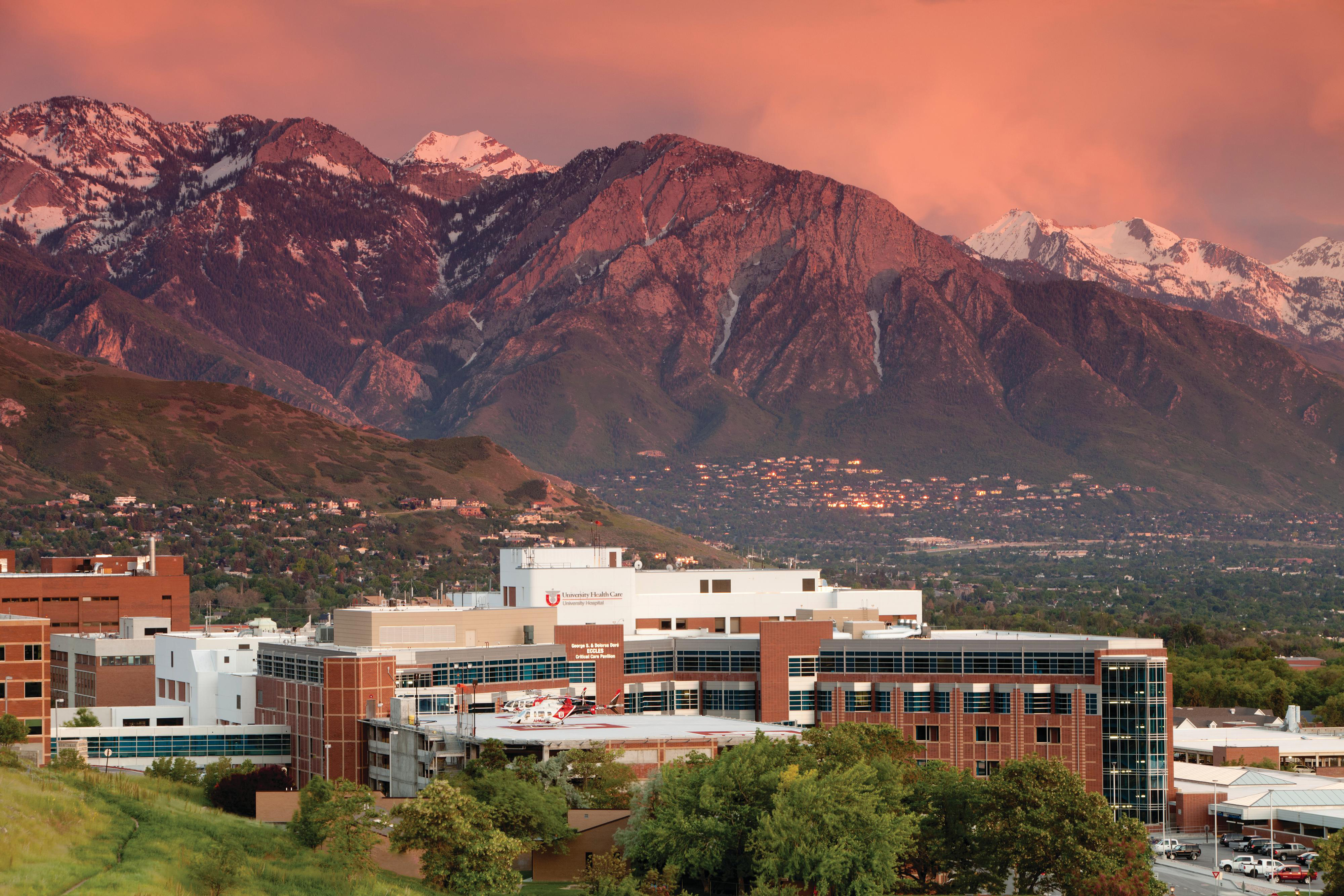
University of Utah Hospital at Dusk

Emergency Medicine Research

Advancing Emergency & Acute Care Research through Discovery, Translation, Education, and Data Science

The University of Utah Department of Emergency Medicine is building a focused, scalable research enterprise that advances emergency and acute care across the full spectrum of discovery - from mechanistic laboratory science and acute care translational research to simulation, education, data-driven outcomes investigation, and national clinical trial work.

Our faculty investigate biologic mechanisms of injury and recovery, develop and test resuscitation strategies in translational models, evaluate educational and practice innovations, and analyze clinical and prehospital data to inform real-world care delivery. Dedicated laboratory infrastructure, a curated Emergency Medicine data warehouse, coordinated clinical research operations, and structured faculty mentorship support this work and enable movement from scientific question to funded investigation to dissemination.

Through collaboration across disciplines and clinical environments, the Department contributes to advancing cardiovascular, neurologic, resuscitation, prehospital, and operational medicine research while strengthening a sustainable pipeline of trainees and clinician-investigators.

WHO WE ARE

The Department of Emergency Medicine is intentionally developing a cohesive research portfolio aligned with defined areas of programmatic strength. Our strategy reflects both the breadth of emergency medicine and a disciplined focus on growth, infrastructure, and faculty development.

We are distinguished by:

  • Emerging basic and mechanistic investigation in cardiovascular and neurologic injury
  • Acute care translational research supported by dedicated laboratory infrastructure
  • Leadership in simulation, education, and practice improvement research
  • Expanding capacity in data-driven and clinical outcomes science
  • Participation in national clinical trial networks
  • Expertise in austere, military, and operational medicine research

Our research enterprise is designed to be collaborative, sustainable, and nationally competitive while maintaining a strong internal pipeline of trainees and clinician-investigators.

RESEARCH DOMAINS

    Leveraging a state-of-the-art large animal laboratory in the Imaging & Neurosciences Center (INC), our translational programs focus on hemorrhagic shock, cardiac arrest, mitochondrial therapeutics, whole blood resuscitation, and commercialization-oriented innovation.

    We advance how emergency care is taught, delivered, and evaluated through simulation science, deliberate practice models, EMS training initiatives, rural and remote provider education, and implementation research.

    Using a curated Emergency Medicine EDW research database, faculty conduct health systems, prehospital linkage, and population outcomes research to inform clinical decision-making and regional care models.

    Faculty-led laboratory programs investigate mitochondrial dynamics, ischemia-reperfusion injury, cardiomyocyte dysfunction, and molecular mechanisms of neurologic injury.

    The Department serves as a participating site in national research networks including SIREN, StrokeNet, CTN, and LITES, enabling large-scale, multi-center investigation in emergency and acute care.

    Through the University of Utah's High Tech West and related initiatives, faculty conduct research relevant to remote, wilderness, operational, and Department of Defense–aligned environments, translating innovation to resource-limited settings.

    Current Research Portfolio


    Our faculty lead and collaborate on federally funded, industry-supported, foundation-sponsored, and institutional research projects spanning laboratory, clinical, prehospital, and systems-based investigation.


    Research Infrastructure


    Emergency Medicine maintains a comprehensive research support infrastructure that combines experienced faculty leadership, talented research staff, data and biostatistical resources, and dedicated laboratory operations to advance projects across the entire research lifecycle.

    Programs & Opportunities


    We offer structured research programs and funding opportunities for undergraduate students, medical students, residents, and fellows, including mentored research experiences, internal grant support, travel funding, and dedicated fellowship training.
     

    FOR QUESTIONS ABOUT RESEARCH, PLEASE CONTACT

    Austin Stevens
    Director, Research & Science
    Email 
    801-585-1216