Curriculum
Curriculum
Curriculum
Mission Statement
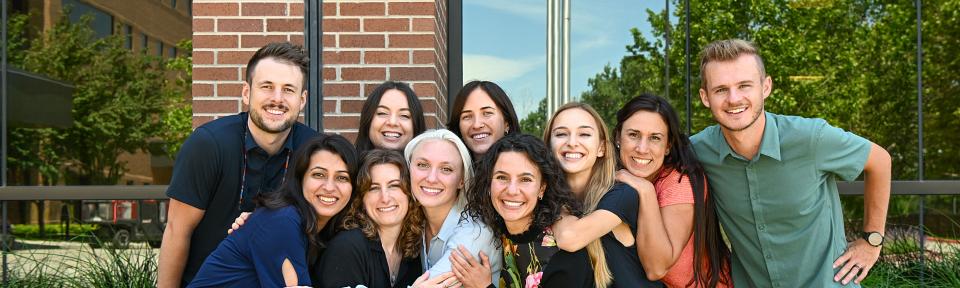
The Triple Board program at University of Utah Health aims to train clinicians who are skilled pediatricians and psychiatrists for all ages; striving to take care of the whole patient from a biopsychosocial perspective, and advocating for our patients and families. We emphasize the integration of primary care and mental healthcare, in an effort to provide earlier access to treatments, and serve as a bridge to educate primary care providers. We strive to provide low cost, high quality healthcare that is patient-centered and evidence based. Our graduates are equipped to provide pediatric and psychiatric care in urban or rural settings, using in-person or telemedicine platforms, with skill in treating the spectrum of disease acuity. Our program supports each other with our motto, “Never Worry Alone.”
Scholarly Work
Residents are exposed to research and quality improvement initiatives across the three specialties. Residents are expected to participate in a quality improvement project during training and present at a grand rounds at the end of training focused on scholarship completed during training. Many residents work on research projects with attendings, and are allowed elective time to participate. Program administration supports scholarly submissions to national conferences, including in the Pediatric Academic Society and the American Academy of Child & Adolescent Psychiatry.
Wellness
Completing a 5-year residency across three specialties is filled with lots of transitions and FOMO. To help support our residents, the Triple Board program at Utah has wellness as a key focus.
- FIRST FRIDAYS: The program has received multiple GME Wellness Grants to support this initiative, which gathers the triple board residents together the first Friday of each month to commune and connect. Twice per year, the program directors set up an alumni-resident dinner.
- ALL THE RETREATS: The Triple Board program has an overnight fall retreat and a full-day spring retreat, that residents are protected to attend. As well, there is an Intern Pediatrics retreat and a PGY 2 Pediatrics retreat. There is a Psychiatry PGY 2 retreat and a yearly Child Psychiatry Retreat that the PGY 5s attend.1)
- University of Utah GME Wellness Program: Provides support groups, FREE, CONFIDENTIAL, QUICK access to individual psychotherapy, wellness treats, and annual wellness elective.
- 24/7 Free Gym Access: Located at Primary Children’s Eccles Outpatient Building, at the HMHI hospital, and at the MHCCC hospital.
- Parking Stipend: (although most of our parking is free!)
- Advising and Mentoring: Triple board residents have buddies across the PGY years. There is an active Group Me chat for the residents. All interns are set up with an advisor in pediatrics, they transition to Dr. Kleinschmit for their PGY 2 year, and identify a faculty mentor(s) for PGY 3 year.
- Program Support: Monthly virtual lunch resident meeting and monthly in-person resident meeting. Semi-annual check-ins with the program directors for all three specialties
- Time Off: 4 weeks of vacation, 5 days of sick time, and support for medical and parental leaves.
- Other University of Utah Benefits
Five-Year Rotation Schedule
PGY 1 Year
Intern year is spent entirely on Pediatrics. Our “X+Y” curriculum (3 weeks traditional rotation + 1 ambulatory week) allows for a guaranteed week of outpatient and academic experience each month, while preserving time during the rest of the month for dedicated inpatient or elective experiences.
Rotations
- During the “Y” Week, residents spend 4-5 half days in their longitudinal outpatient experience (LOE). Other longitudinal experiences make up the remainder of the time during "Y" weeks, including additional ambulatory experiences, advocacy, and individual or small group work on quality improvement or research.
- Rotations during "X" Weeks include Inpatient Pediatric Wards, Night Shift, Pediatric Neurology, Well Baby Nursery, Newborn Intensive Care Unit (NICU), Pediatric Intensive Care Unit (PICU), Subspecialty Electives, Child Abuse, Emergency Department (ED).
Didactics
- Follow pediatric didactics schedule on Pediatrics. Attend one psychiatry didactic during each "Y" week.
PGY 2 Year
Our residents join orientation for general psychiatry starting the last week of their intern year. During this year, they rotate for six months on General Psychiatry, four months on Child Psychiatry, and two months on Pediatrics.
Rotations
- Rotations include Inpatient Adult Psychiatry, Adult Neurology, Adult Crisis / Emergency Psychiatry, Inpatient Child Psychiatry, Pediatric Psychiatry Consult-Liaison (C-L), Pediatric Hematology / Oncology Wards, Supervisory Community Nursery & Newborn Intensive Care Unit (NICU)
- "Y" Weeks: Longitudinal Outpatient Elective (LOE), Developmental-Behavioral Pediatrics
Didactics
- During Psychiatry months, attend two half-days per week of psychiatry didactics (PGY 1/2 Topics).
- During Child Psychiatry months, attend one half-day of PGY 2 psychiatry didactics.
- During Pediatric months, attend pediatric didactics, and one half-day per "Y" week of psychiatry didactics.
PGY 3 and PGY 4 Year
PGY 3 JULY - DECEMBER
Rotations
- In the fall, residents spend four months on Pediatrics.
- "X" Weeks: Supervisory Pediatric Wards, PICU/NICU, Elective, ED/Acute Care
- "Y" Weeks: Longitudinal Outpatient Experience (LOE), Developmental-Behavioral Pediatrics
- Two months on Child & Adolescent Psychiatry Day Treatment
Didactics
- Residents attend PGY 3 a half day of Psychiatry didactics during the fall.
PGY 3 & PGY 4 JANUARY - DECEMBER
Rotations
Starting January of PGY 3 year, residents complete 12 months consecutively on Psychiatry.
One month of Inpatient Psychiatry, one month of Addiction / Adult Consult-Liaison (C-L), and longitudinal rotations to include Outpatient Psychiatry Continuity Clinic, Psychotherapy, Mental Health Integration, Addiction, Community Psychiatry, Forensics.
During this year, residents have LOE three times monthly, and child psychiatry MHI one time monthly.
Didactics
Full day Psychiatry didactics on Wednesdays during January-June.
Wednesday morning Psychiatry didactics, Wednesday afternoon Child Psychiatry didactics July-December.
PGY 4 JANUARY - JUNE
Rotations
Residents return for their final six months on Pediatrics.
"X" Week Rotations: Two Months of Supervisory Wards, Emergency Department / Urgent Care, Community / Ambulatory Pediatrics, Elective.
"Y" Week Rotations: Developmental-Behavioral Pediatrics, Longitudinal Outpatient Elective (LOE), Ambulatory Pediatrics.
Didactics
Pediatrics conferences.
Child Psychiatry didactics during "Y" Weeks.
PGY 5 Year
Rotations
- Residents complete one longitudinal year on Child Psychiatry.
- General Child Psychiatry Continuity Clinic
- Psychotherapy
- Mental Health Integration (MHI)
- School Mental Health Psychiatry
- HOME Clinic (caring for children with neurodevelopmental activities, and autism diagnosis)
- Electives including: Working with Preschool Children, Trauma Psychiatry, Residential Treatment, DBT Groups, and School Clinics.
- Residents can choose their Pediatric Longitudinal Outpatient Experience (LOE) this year.
Didactics
- Wednesday afternoon Child Psychiatry didactics.
Psychotherapy Training
-
PGY 2: Psychotherapy didactics through Psychiatry; Brief psychotherapy on Pediatric C-L (supervised by psychology).
-
PGY 3: Psychotherapy patients in Day Treatment; Psychotherapy Didactics through Psychiatry; Adult psychotherapy longitudinal outpatient clinic; group psychotherapy electives.
-
PGY 4: Psychotherapy longitudinal outpatient clinic; Psychotherapy didactics through psychiatry; 2-year Child Psychiatry Psychotherapy didactics; group psychotherapy electives.
-
PGY 5: 2-year Child Psychiatry Psychotherapy didactics; Child Psychotherapy longitudinal outpatient clinic; group psychotherapy electives.
*Some residents also choose to complete specialized psychotherapy certification, such as Trauma-Focused CBT.
Specialized Tracks / Concentrations
On Pediatrics, residents can apply for the Global, Rural & Underserved Child Health (GRUCH) or HEART (advocacy) track during intern year.
Psychiatry offers a number of specialized concentrations that residents can take part in.
The Child Psychiatry program at the University of Utah offers a Childhood Trauma Certificate. The requirements for this track can be completed in the final 2 years of residency. The requirements are as follows: 1) Complete training in and practice an evidence-based trauma-focused psychotherapy; 2) Become a facilitatory in the Childhood Trauma Core Curriculum; 3) Complete a scholarly project focused on childhood trauma.